Climate litigation has become a global phenomenon, but its future direction will increasingly be shaped by regions where comparatively little litigation has been documented. One such focal point is Asia. The region encompasses communities highly vulnerable to climate impacts alongside some of its fastest-growing economies, making its energy choices and emissions trajectories crucial to global climate outcomes. The region includes major greenhouse-gas emitters such as China, India, and Indonesia, alongside countries with far smaller emissions footprints, a contrast that shapes debates over responsibility and climate justice. Climate litigation in Asia therefore lies at the intersection of climate governance, climate justice, and climate accountability. Against this backdrop, this symposium brings together scholars and practitioners to take stock of climate litigation across Asia, place developments in different jurisdictions in conversation, and consider what they mean for the global field. Its goal is to make visible legal developments often underrepresented in English-language scholarship and to identify the doctrinal, institutional, and practical conditions shaping climate accountability across the region.
Why Asia, Why Now?
Across Central, East, Southeast, South, and West Asia, claimants and public authorities are using constitutional rights, administrative law, civil liability, consumer protection, human rights, environmental impact assessment, and financial regulation to challenge inadequate climate action, contest high-emitting projects, and seek accountability for climate-related harm. No single regional model exists for climate litigation. Rather, the cases that have been brought to date reflect the region’s diverse legal systems, political economies, institutional settings, sources of emissions, and experiences of climate vulnerability. That diversity is a defining feature of climate litigation in Asia as reflected in the growing regional scholarship (see, generally, here and here).
Litigation in Asia is developing against a backdrop of accelerating climate impacts. For example, in 2026, extreme heat affected Japan and South Korea, severe monsoon flooding caused deaths in India and inundated refugee-hosting areas in Bangladesh, and typhoon-related flooding in China forced mass evacuations. The Rasuwa flash flood on the Nepal-China border further illustrated the transboundary character of mountain hazards, while scientific and official assessments of its causes continue. These events are consistent with the broader risk pattern assessed by the Intergovernmental Panel on Climate Change (IPCC): rising temperatures increase the likelihood of heatwaves across Asia; drought risk is increasing in arid and semiarid areas of West, Central, and South Asia; flood risk is increasing in monsoon regions of South, Southeast, and East Asia; and glaciers are melting across the Hindu Kush Himalaya. Climate harms interact with poverty, displacement, food and water insecurity, fragile infrastructure, threats to Indigenous peoples and environmental defenders, and unequal access to legal remedies. These harms often fall disproportionately on communities that have contributed least to global greenhouse gas emissions. That imbalance is increasingly reflected in transnational claims involving Asian communities and corporate defendants based in the Global North, discussed below.
Mapping Climate Litigation Across Asia
The Sabin Center’s Climate Litigation Database records 103 cases across 15 Asian jurisdictions and territories: South Korea (17), Indonesia (17), India (16), Pakistan (13), Türkiye (10), Japan (6), China (4), Nepal (4), Taiwan (4), the Philippines (3), Singapore (3), Malaysia (2), Sri Lanka (2), Kazakhstan (1), and Thailand (1). This Asia-wide snapshot is not limited to jurisdictions represented in the symposium.
The Sabin Center’s database defines a climate case as one in which climate change law, policy, or science is a material issue of law or fact. This threshold ensures that climate change is not merely a background concern, but it may exclude disputes with significant climate implications involving air pollution, land use, biodiversity loss, energy infrastructure, Indigenous rights, or environmental defenders when climate change is not expressly framed by the parties or the court. This limitation is not unique to Asia. It is particularly important when assessing the region, however, because many disputes affecting emissions and carbon sinks are pleaded primarily through these other bodies of law and may therefore be absent from climate-litigation datasets.
Emerging Trends in Asian Climate Litigation
The cases in the Sabin Center database highlight several cross-cutting trends in Asian climate litigation. First, rights-based and intergenerational claims increasingly challenge the adequacy of national climate frameworks and the distribution of future risks. For example, in Do-Hyun Kim et al. v. South Korea, the Constitutional Court of South Korea found that the country’s climate framework failed to provide adequate safeguards for emissions reductions after 2030. Cases in Japan–Youth Climate Case Japan for Tomorrow–and India–Ridhima Pandey v. Union of India–have likewise placed the rights and interests of younger and future generations at the center of challenges to government climate action.
Second, cases are moving beyond demands for governments to adopt mitigation targets and increasingly testing whether those targets are implemented, whether adaptation measures are adequate, and what remedies can deliver effective protection. Leghari v. Federation of Pakistan remains a foundational example of a court treating delay in implementing climate policy as a rights issue and creating an institutional mechanism to supervise action. More recent litigation is testing whether governments have taken concrete steps to protect people from present hazards: In re “Beat the Heatwave and Climatic Change to Save the Life of Public at Large” addresses the implementation of heat action measures in India, while Global Legal Action on Climate Change v. the Philippines Government sought government action to mitigate increasingly damaging floods. These cases highlight the relevance of the choice of remedy, and what effective relief looks like before, during, and after climate-related disasters.
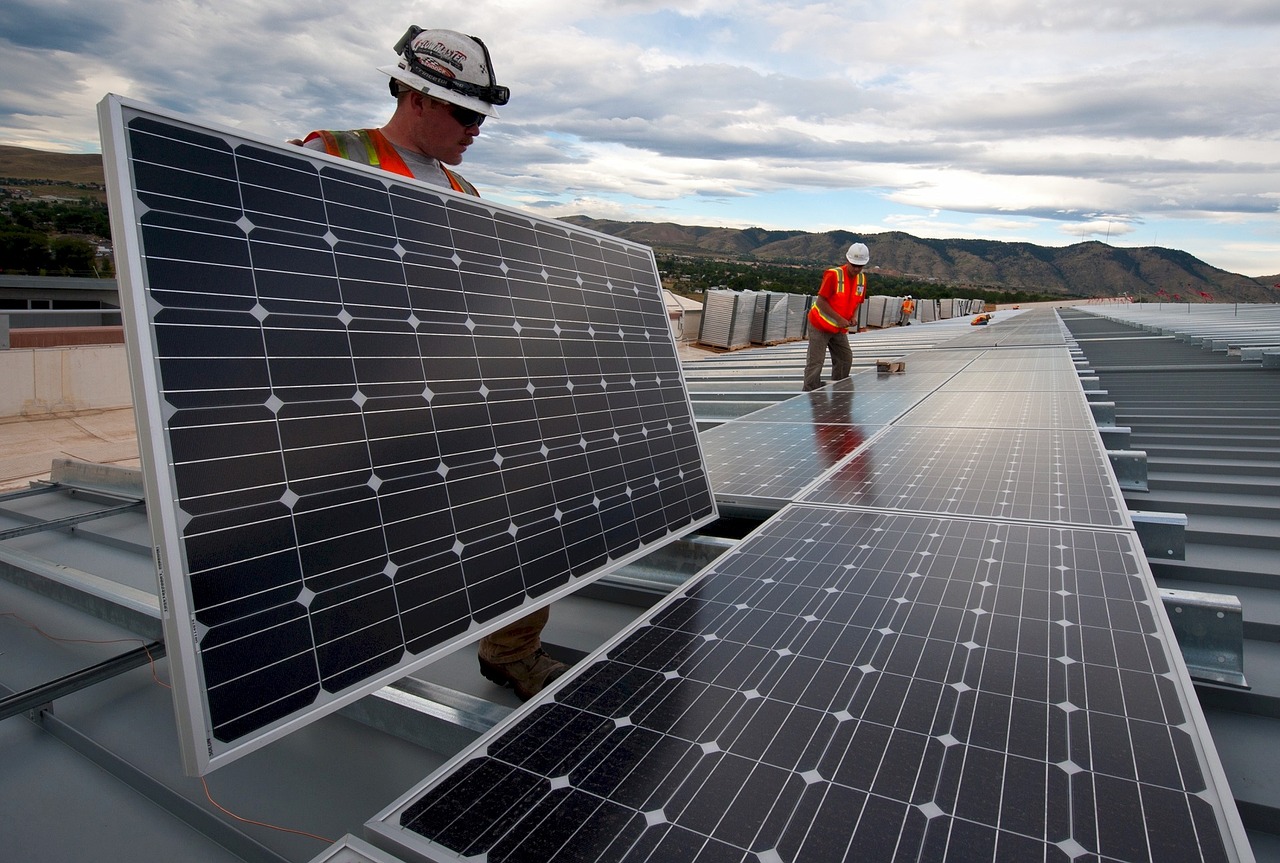
Third, courts are confronting tensions within the energy transition. Residents of Omkoi v. Expert Committee on Environmental Impact Assessment Consideration challenges the approval of a coal-mining environmental impact assessment in Thailand; the Kobe coal-plant cases (against Kobe Steel Ltd. and the government) and the Yokosuka Climate Case challenged new coal-fired power projects in Japan; and M.K. Ranjitsinh et al. v. Union of India required the Indian Supreme Court to navigate the relationship between renewable-energy infrastructure, biodiversity protection, and constitutional rights. These disputes show that climate-aligned outcomes cannot be assessed solely by counting megawatts or emissions reductions; participation, ecological integrity, distributional effects, and the rights of affected communities also matter.
Fourth, the litigation docket is extending beyond conventional suits against governments. Indonesian peatland and forest-fire cases brought by the Ministry of Environment seek compensation and restoration from companies whose conduct allegedly released greenhouse gases and damaged carbon sinks. In Singapore, regulatory complaints concerning bond issuances by Korea Electric Power Corporation (KEPCO) and JERA use exchange rules and disclosure obligations to test climate accountability in financial markets. Together with emerging greenwashing and due-diligence claims, these proceedings show the increasing relevance of corporate, financial, and supply-chain actors.
Asian Climate Claims Across Borders
The region’s influence also extends beyond its domestic forums. In Casquejo and others v. Shell plc and another (the Odette case), Filipino survivors of Super Typhoon Odette are suing Shell in the courts of England and Wales under Philippine law. Indonesian residents of Pari Island are suing Holcim in Switzerland for compensation, emissions reductions, and support for adaptation. Thirty-nine Pakistani farmers affected by flooding in 2022 have brought a damages claim in Germany against RWE and Heidelberg Materials. Together, these cases connect climate impacts in highly vulnerable Asian communities with corporate conduct, emissions, and legal forums elsewhere, and they illustrate why a forum-only case count cannot capture the region’s full legal reach.
The Philippines Commission on Human Rights’ Carbon Majors inquiry helped create the foundation for this transnational turn. Although the inquiry was investigative rather than judicial, it assembled an extensive record on climate science, human rights impacts, corporate contributions to emissions, long-standing industry knowledge about the causes and impacts of climate change, climate disinformation, due diligence, and access to remedy. Jolene Lin argues that this record supplied a factual bedrock for a small but emerging group of “polluter pays” or loss-and-damage cases in which Global South communities sue high-emitting companies in the companies’ home jurisdictions. The inquiry’s importance thus lies not only in its conclusions, but also in how an institution in the Global South generated evidence and accountability theories that can travel across borders. Lin cautions that these cases are expensive, procedurally difficult, and vulnerable to adverse precedent, while also emphasizing that their effects may include agenda setting, narrative change, coalition building, and future replication even when courtroom outcomes are mixed.
International law, science, and comparative jurisprudence are also shaping cases brought in Asian courts. The International Court of Justice (ICJ) advisory opinion on climate change offers a new reference point for state obligations, due diligence, human rights, and the legal consequences of climate harm. Its potential influence is already visible in the Climate Justice Case in Japan and RimbaWatch’s challenges to Malaysia’s climate and consumer-protection frameworks.
Looking Ahead: What the Symposium Will Cover
Climate litigation in Asia is not peripheral to global climate change law; it is an important source of its development. Cases and institutions in the region have already influenced understandings of state responsibility, fundamental rights, implementation, corporate accountability, transnational responsibility, and the role of courts and human rights institutions in climate governance.
Over the coming weeks, contributors will examine how climate claims are evolving across Asian jurisdictions, including challenges to the ambition and implementation of mitigation measures; adaptation and disaster response; fossil-fuel and renewable-energy projects; corporate, financial, and supply-chain accountability; and transnational litigation seeking compensation, emissions reductions, or adaptation support. The symposium pairs jurisdiction-specific analysis with cross-cutting questions about standing, rights, causation, remedies, access to justice, and the use of climate science, human rights, and international law. It also asks which cases and communities remain absent from English-language scholarship and global databases, and how attention to local knowledge and local-language materials changes our understanding of the field. The contributions do not purport to define the boundaries of Asian climate litigation; together, they aim to offer a more accurate and plural account of a rapidly evolving body of law and to create a foundation for continued research, dialogue, and collaboration.

Dr. Maria Antonia Tigre is the Director of Global Climate Litigation at the Sabin Center for Climate Change Law at Columbia Law School.

Manasa Venkatachalam
Manasa Venkatachalam is an independent legal consultant based in Amsterdam.

Masako Ichihara
Masako Ichihara is a Program-Specific Assistant Professor at the Center for Interdisciplinary Study of Law and Policy, Kyoto University.

Moumita Das Gupta
Moumita Das Gupta is a Bangladeshi lawyer working with the Centre for Climate Justice – Bangladesh (CCJ-B) as a Senior Research Fellow.