Recently in Japan, two new cases brought by plaintiffs whose profiles reflect the cross-regional and cross-generational nature of climate change issues have joined the caseload. One is the Youth Climate Case for Tomorrow, brought by younger generations and filed before the Nagoya District Court in August 2024. This case is unique not only as the first Japanese climate case filed by youth, but also as the first climate case based on the Japanese Civil Code. As discussed in a previous blog post, Japanese climate litigation has focused mainly on claims based on personal rights and the right to a peaceful life. The Youth Climate Case For Tomorrow, however, raises tort claims under Articles 709 and 719 of the Civil Code. Tort claims have also been raised in a second recent case–the Climate Justice Case–which was filed by 452 plaintiffs in December 2025, followed by the secondary filing by 454 plaintiffs in April 2026. The plaintiffs allege a governmental tort for insufficient climate policy that infringed human rights. The post builds on prior analysis of climate litigation in Japan published on the Climate Law Blog (see here) and highlights new trends not observed in previous cases.
Past Climate Litigation
The two cases highlighted in this post both employ innovative strategies to overcome the fact that, in past climate litigation in Japan, the courts have dismissed all claims. In previous cases, Japanese citizens sought injunctions against the construction or operation of coal-fired power plants in Sendai, Kobe, and Yokosuka. Citizens filed the first such case in Sendai in 2017, claiming that the power plant’s emissions of greenhouse gases (GHG) and other pollutants violated their personal rights to life, health, and bodily integrity through climate change and air pollution (Sendai Citizens v. Sendai Power Station). In Citizens’ Committee on the Kobe Coal-Fired Power Plant v. Kobe Steel Ltd., et al., filed in 2018 against two coal-fired power plants in Kobe, the plaintiffs elaborated on the concept of personal rights to life, health, and bodily integrity and the right to a peaceful life (derived from personal rights).
Personal rights and the right to a peaceful life are concepts commonly used in civil law in cases related to air and environmental pollution. In the Kobe civil case, the plaintiffs also argued that the right to a peaceful life included the right to enjoy a stable climate, although the courts rejected that claim. The Kobe District Court and the Osaka High Court considered whether the GHG emissions created a concrete danger that would violate the right to a peaceful life. They concluded that the plaintiffs’ anxiety about climate change was not sufficiently serious. The courts also stated that the responsibility for emissions reduction could not be unilaterally attributed to the power plants in question, even if climate change constituted a concrete danger. Based on these findings, the civil lawsuit in Kobe found no infringement of rights, and the claim was dismissed. In Citizens’ Committee on the Kobe Coal-Fired Power Plant v. Japan, the administrative lawsuit based on the same facts as Citizens’ Committee on the Kobe Coal-Fired Power Plant v. Kobe Steel Ltd., et al., the court held that the plaintiff lacked standing, thus dismissing the case (see here).
Other early climate cases, namely, Yokosuka Climate Case and Citizens’ Committee on the Kobe Coal-Fired Power Plant v. Japan, focused more on procedural issues. Although the courts recognized standing for air pollution claims, they did not recognize standing for climate change claims. The courts found that climate-related interests were public in nature and could not be pursued by individuals (see here). Taken together, the earlier cases illustrate the difficulty citizens face in establishing a concrete danger and standing for climate-related claims. This helps explain why claimants have also relied on air-pollution arguments in Japanese climate cases: Looking at the global landscape, climate litigation has rapidly gained momentum and expanded geographically, spurred by cases such as the 2019 Urgenda Foundation ruling and the 2021 Neubauer ruling. This trend culminated in 2024, following a case in Switzerland, when the Constitutional Court of South Korea finally issued a landmark ruling in a climate lawsuit. By then, climate litigation was beginning to gain global traction as a new category of environmental litigation, unlike when earlier cases were filed. It can be inferred that these global trends are the reason why the two cases introduced below limited their claims exclusively to arguments related to climate change.
Youth Climate Case
The Youth Climate Case, which remains pending, was filed against 10 major thermal power companies in Japan, which together account for approximately 30% of Japan’s energy-related carbon dioxide (CO₂) emissions. The plaintiffs seek an injunction requiring reductions in CO2 emissions from the power plants based on Articles 709 and 719 of the Civil Code. The plaintiffs argue that the defendants, as private corporations, have a legal duty to reduce CO2 emissions by 65% by 2035 relative to 2019 levels, based in part on the corporate responsibility to respect human rights.
The plaintiffs in the Youth Climate Case draw on the Dutch case Milieudefensie et al. v. Royal Dutch Shell plc. The plaintiffs argue that the concept of ‘unwritten duty of care’ discussed in the Shell case also exists in Japan and rely on it as the legal basis for their request. In the Complaint, the plaintiffs also referred to other landmark cases, such as Urgenda Foundation v. State of the Netherlands and Smith v. Fonterra Co-Operative Group Limited, and argued that the Japanese judiciary should recognize the duties of the corporations (as well as the State) to reduce CO2 emissions and respect human rights, including those reflected in the United Nations Guiding Principles on Business and Human Rights and OECD Guidelines for Multinational Enterprises on Responsible Business Conduct.
The Youth Climate Case differs from past climate cases in Japan in many ways. First, the plaintiffs request a reduction of CO2 emissions rather than an injunction halting the construction or operation of particular power plants. Second, the request is based on the Civil Code. As such, the Nagoya District Court will be the first court to consider whether CO2 emissions can give rise to tort liability under Articles 709 and 719. Third, the case is brought against multiple thermal power companies. This has implications for the attribution of climate-related harms. In past civil climate cases brought against individual thermal companies or tied to particular construction projects, judges were reluctant to attribute responsibility to specific power plants because of the global nature of climate change (see this previous blog post). That may be less of an issue in the Youth Climate Case.
In the first court hearing in the Youth Climate Case, held in October 2024, the plaintiffs shared what motivated them to file suit, including their experiences of heavy rainfall and extreme heat. The defendants, by contrast, argued that the plaintiffs lacked standing because the asserted interests concerned environmental protection rather than legally protected individual rights or interests. They also indicated that they would contest the claim that individual corporations have a legal obligation to reduce CO2 emissions.
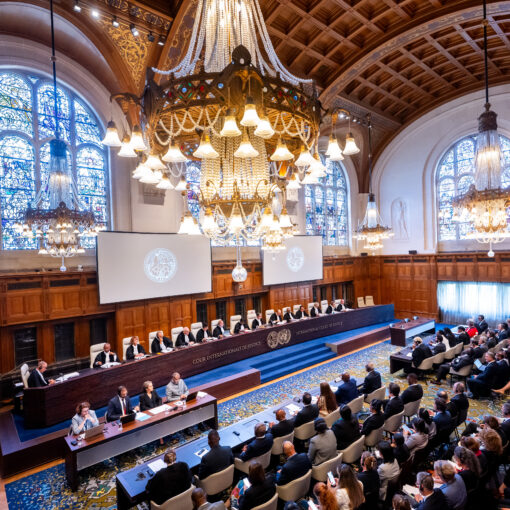
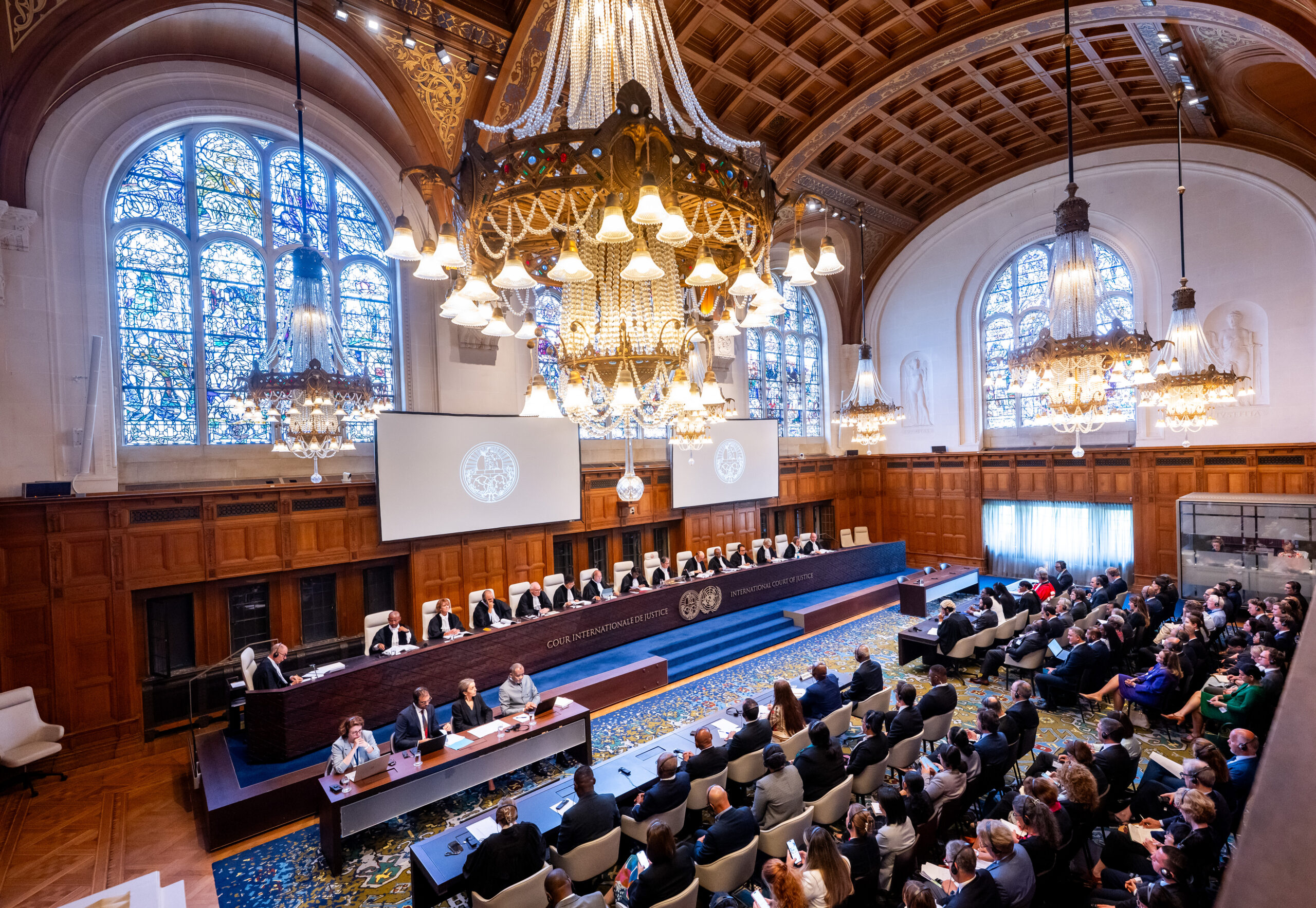
After the ICJ’s advisory opinion on climate change was delivered in July, the plaintiffs’ attorneys referred to the ICJ’s advisory opinion, to argue that climate protection was essential for the enjoyment of human rights and that the defendants and the State had a duty to protect citizens from the negative impacts of climate change under environmental treaties and customary international law. Moreover, the plaintiffs claimed that Japan, as a G7 member, bore even greater responsibility. They also relied on paragraphs 427-428 of the advisory opinion, which address circumstances in which a State’s failure to take adequate measures to protect the climate system from GHG emissions may constitute a wrongful act under international law. Reasoning by analogy, the plaintiffs argue that private corporations could also be held liable in tort if they fail to take necessary measures against climate change. In the fifth hearing (January 2026), the plaintiffs further emphasized the ICJ’s advisory opinion and argued that power generation companies have obligations analogous to those of States to prevent serious human rights harms arising from climate change.
Climate Justice Case
On July 14, 2025, an attorney in Japan advertised on social media for individuals who want to join a lawsuit against the government, challenging its inadequate climate policies. Individuals could sign up by submitting a letter available on the attorney’s website and paying a 1,000 yen participation fee. 452 people initially signed up. On December 18, 2025, they filed suit in the Tokyo District Court. On April 2, 2026, another 454 individuals who had applied in response to the call for plaintiffs joined the lawsuit, and filed the same claims again with the same District Court. The plaintiffs’ attorneys have publicly stated that they intend to launch a third call for plaintiffs to repeatedly file lawsuits with the same claims.
Regarding the claims, the plaintiffs seek compensation for damage incurred as a result of the governments infringement of various human rights, including the right to life and health (article 13 of the Constitution, article 6(1) of the International Covenant on Civil and Political Rights, article 12(1) of the International Covenant on Economic, Social and Cultural Rights), the following rights speculated in the Convention on the Rights of the Child: article 6 (right to growth and development), article 19 (right to protection from violence), article 24 (right to enjoy health, article 28 (right to education), article 31 (right to play), and the following constitutional rights: freedom of business (article 22, Paragraph 1), property rights (article 29, paragraph 1), and environmental rights (not explicitly stated in the Constitution but derived through interpretation of articles 13 and 25). The plaintiffs also claim a breach of the right to a peaceful life, which has been recognized in precedents as a component of personal rights.
In the complaint, the State’s obligation under Article 1 of the State Redress Act is identified as reducing GHG emissions to achieve the 1.5°C target, the primary temperature goal agreed upon by the parties to limit the global average temperature rise under the Paris Agreement. Next, it argues that Japan’s current targets fall short, both numerically and in adopting a linear reduction pathway, despite climate science showing that substantial emissions reductions are needed in the near term. Public officials who set these current targets are deemed by the plaintiffs to have violated the norms governing official duties, given the gravity of the consequences: human rights violations caused by climate change. Furthermore, the legislative inaction of Members of the National Diet, the legislative body, who failed to enact the legislative measures necessary to achieve the 1.5°C target over the long term, is deemed unlawful. Then, the complaint introduces 12 specific examples of human rights infringements, including personal experiences of heatstroke, restrictions on children’s activities, additional economic burdens, and damage to primary industries. They assert that the damages exceed 1,000 yen per plaintiff.
Conclusion
Climate litigation in Japan appears to be reaching a turning point. In the Sendai, Kobe, and Yokosuka cases, the plaintiffs sought to halt the construction or operation of specific coal-fired power plants. The plaintiffs were primarily residents living near the power plants in question, and their legal arguments relied on rights and regulations—such as the Environmental Impact Assessment Act and personal rights—that had traditionally been invoked in pollution and environmental litigation. As a result, climate litigation was framed as an extension of past pollution and environmental litigation, and the legal framework adopted was relatively familiar to the courts. In contrast, in the two cases currently pending, the plaintiffs are based in various regions across the country and are more directly challenging the legality of greenhouse gas emissions. Specifically, they seek to hold corporations and the government legally liable for their failure to reduce emissions. As previously noted, this shift in strategy stems from the influence of landmark rulings in climate litigation around the world. While judgments from other countries have no legal binding force in Japan, climate change—the subject of these lawsuits—is a global challenge, and many of the issues at stake are naturally shared. Consequently, climate litigation often exhibits a phenomenon where judgments from other countries and international courts like the ICJ mutually influence one another. Going forward, climate litigation in Japan is likely to be increasingly influenced by similar lawsuits worldwide.

Grace Nishikawa
Grace Nishikawa is the Sabin Center's Peer Review Network of Global Climate Litigation's national rapporteur for Japan.

Masako Ichihara
Masako Ichihara is a Program-Specific Assistant Professor at the Center for Interdisciplinary Study of Law and Policy, Kyoto University.