This is the second of two posts examining New Zealand’s Climate Change Response (Tort Liability) Amendment Act 2026. Part I examined the legislation’s intervention in Smith v Fonterra and situated it within an emerging international backlash against corporate climate litigation. This post asks a different question: what does New Zealand’s decision to extinguish climate tort liability mean in light of states’ evolving obligations under international climate and human rights law?
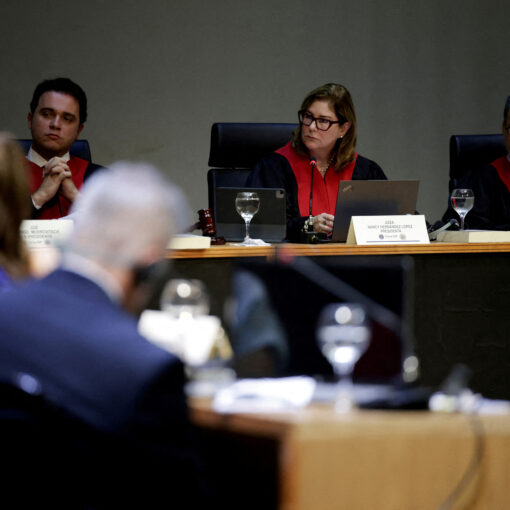
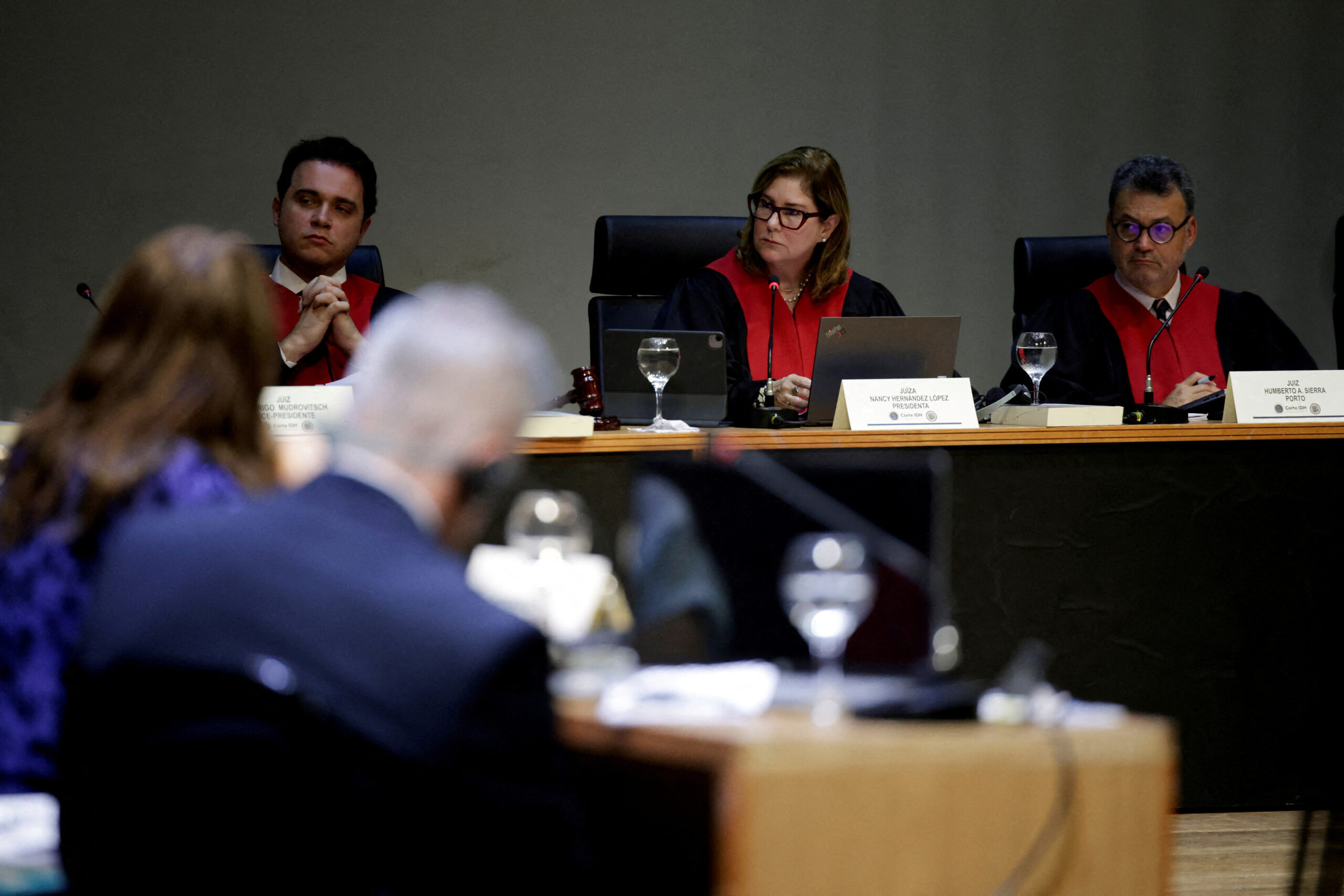
The question comes at a particularly significant moment. In 2025, both the International Court of Justice (ICJ) and the Inter-American Court of Human Rights (IACtHR) issued landmark advisory opinions clarifying states’ obligations in relation to climate change. As widely discussed in dedicated Climate Law Blog symposiums on the ICJ and IACtHR advisory opinions, the opinions significantly sharpen the legal content of states’ mitigation, regulatory, human rights, and remedial obligations. Although the IACtHR’s opinion is not binding on New Zealand, read together, the opinions provide an important international-law framework against which the broader dismantling of New Zealand’s climate protections can be assessed.
Climate Law and Due Diligence
As previously argued by Wewerinke-Singh, the ICJ rejected attempts to confine states’ climate obligations to the United Nations (UN) climate regime and instead located them across treaty and customary international law. Of particular relevance here, the Court held that due diligence requires states to use “all the means at [their] disposal” to prevent significant environmental harm, including through effective national regulatory systems governing public and private operators, backed by enforcement and monitoring mechanisms (para. 229, 281–282).
The IACtHR’s Advisory Opinion OC-32/25, while not binding on New Zealand, reinforces this direction of travel, emphasizing states’ obligations to regulate and supervise corporate conduct, including by requiring effective human rights and environmental due diligence across corporate operations and value chains, backed by continuous monitoring, independent assessment, transparency, participation, and accountability mechanisms (paras. 345–351).
Access to Justice as a Component of State’s Climate Obligations
Access to justice is especially important in this context. As argued before, domestic remedies are a critical component of climate accountability, particularly because they provide a mechanism through which private business operators can be held accountable for climate-related harm. The IACtHR devoted substantial attention to ensuring that climate claims can actually reach adjudication, addressing standing, evidentiary barriers, judicial capacity and access to effective remedies (paras. 540–558). The advisory opinions further clarify that access to courts is not merely a procedural right belonging to the individual claimant — it is part of the infrastructure through which states discharge their own climate obligations (IACtHR, paras. 540–557; ICJ, para. 282).
The HRC stated in Mahuika v New Zealand, a case that also arose from Parliament extinguishing Māori rights pending before the courts, that “in the abstract it would be objectionable and in violation of the right of access to court if a State party would by law discontinue cases pending before the court.” The Liability Act therefore raises a serious question under Article 14(1) of the ICCPR, which protects the right to a fair hearing in the determination of rights and obligations in a suit at law.
If states must prevent significant climate harm through effective enforcement mechanisms, then eliminating an existing avenue for civil accountability for that harm is not merely a denial of justice to Smith; it is a state withdrawing one of the instruments through which it fulfills its international obligations. The government’s argument that the ETS and CCRA provide adequate accountability does not fully answer this concern. As noted above, neither the ETS nor the CCRA compensates for harm, and neither allows a court to test whether specific corporate conduct met legal requirements. Closing the courthouse door does not redirect claimants to an equivalent remedy, it removes a distinct form of judicial accountability.
Indigenous Rights
This framing also has a specifically Indigenous dimension that the advisory opinions support. The IACtHR’s Opinion, drawing on the American Convention on Human Rights and Indigenous rights frameworks, emphasizes that access to justice must be culturally adequate and effective — not merely formally available. Smith is a Māori elder whose claims rest partly on tikanga Māori, which the New Zealand Supreme Court recognized as part of NZ common law. Eliminating his cause of action before trial is not only a denial of a general civil right; it extinguishes the specific legal mechanism through which tikanga-grounded climate harm was to be adjudicated for the first time. Read alongside UNDRIP Articles 27 and 40 — which guarantee Indigenous peoples the right to have their rights adjudicated through fair and impartial procedures — and the Human Rights Committee (HRC)’s decision in Daniel Billy and others v Australia, which found violations of Articles 17 and 27 of the International Covenant on Civil and Political Rights (ICCPR) arising from Australia’s failure to adequately protect Torres Strait Islanders from climate harm, the Indigenous access to justice dimension is a legally distinct and underexplored ground of challenge.
Non-Regression
The Liability Act also raises questions under the increasingly recognized principle of non-regression in international environmental and climate law, which weighs against unjustified rollback of existing levels of environmental protection. The Liability Act is a particularly stark candidate for non-regression analysis, because the legislation retrospectively removes an existing common-law avenue without replacing it.
What International Accountability Remains?
New Zealand’s Liability Act, read alongside other recent anti-climate measures in New Zealand, including the reversal of the offshore exploration ban, the weakening of biogenic methane targets, the severing of ETS/NDC linkage, and the rejection of the Climate Change Commission’s recommendations, may form part of a pattern of conduct that falls below what these opinions require. Any one of these measures might be assessed differently in isolation; viewed cumulatively, however, they raise a more substantial question about compliance with the due diligence standard articulated in the advisory opinions.
The Liability Act therefore raises a serious question under Article 14(1) of the ICCPR, which protects the right to a fair hearing in the determination of rights and obligations in a suit at law. Potential claims under Articles 17 and 27 may also arise. For Smith himself, an individual communication to the HRC offers the clearest international avenue. Although such communications ordinarily require exhaustion of available domestic remedies, the Human Rights Committee (HRC) does not require exhaustion where no effective remedy is reasonably available—a question that assumes particular significance where the legislation challenged itself forecloses the judicial avenue through which the underlying claim could be heard. The HRC took a similar approach to admissibility in Daniel Billy and others v Australia, where the absence of an effective domestic avenue did not prevent it from considering the communication.
The international implications may also extend beyond an individual human rights complaint. The ICJ’s Advisory Opinion characterized customary obligations protecting the climate system as obligations erga omnes, whose breach may be invoked by any state, irrespective of specially affected status, and the principal mitigation obligations under the climate treaties as erga omnes partes (paras. 440–442). New Zealand accepts the ICJ’s compulsory jurisdiction under Article 36(2) of the Court’s Statute, subject to reciprocity and its reservations. This means that, in principle, another state accepting the Court’s jurisdiction could invoke New Zealand’s responsibility if the broader dismantling of its climate framework were alleged to breach the international climate obligations identified by the Court. The Advisory Opinion is especially pertinent here: the Court identified failures to regulate private emissions as potentially internationally wrongful acts and stated that cessation of a continuing breach may require the revocation of legislative measures (paras. 444, 447). The significance of these obligations is not purely interpretive. As previously discussed, the ICJ expressly situated breaches of climate obligations within the ordinary law of state responsibility, including cessation and reparation.
Conclusion: What Comes Next
Smith has said he intends to fight on and he has identified several legal pathways. He’s reportedly considering a challenge under the New Zealand Bill of Rights Act 1990, raising access to justice and the right to a fair hearing, the HRC communication route, and a possible refocusing of his work on public law and international advocacy rather than tort. Lawyers for Climate Action NZ and the Environmental Law Initiative continue to litigate against the government itself on the broader question of climate framework dismantling.
For the international field, the Liability Act sets a troubling precedent for legislative intervention to foreclose pending climate litigation. What New Zealand adds to that picture is a case study in how a high rule-of-law country, with strong judicial institutions that had already authorized a landmark climate case, can move in eleven weeks from announcement to enactment of a law that extinguishes the case before trial. Bookman writes that the question for climate and tort law is no longer whether it evolves to meet climate harms, but how. The New Zealand government has given one answer: by statute, before the question could be answered on the merits. That answer is worth scrutinizing — both by courts that may face similar legislative interventions, and by the international bodies considering how states’ emerging climate obligations bear on access to justice and corporate accountability.

Dr. Maria Antonia Tigre is the Director of Global Climate Litigation at the Sabin Center for Climate Change Law at Columbia Law School.