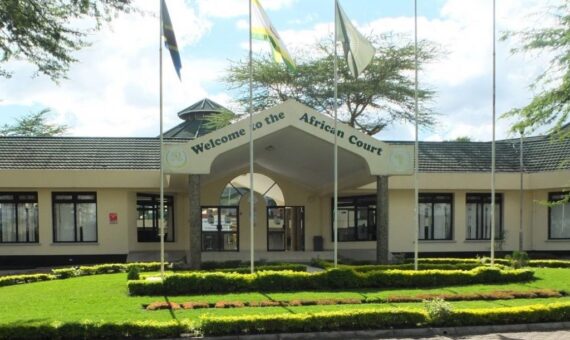
On Monday, February 9, 2026, the Sabin Center submitted an amicus curiae brief to the African Court on Human and Peoples’ Rights (African Court) in the matter of the Request for an Advisory Opinion on the Obligations of States with Respect to the Climate Change Crisis. The brief explains how climate science can help inform the Court’s assessment of State obligations to respect, protect, and fulfill human rights in the context of climate change.
Background
The original request, submitted by the Pan African Lawyers Union (PALU) on May 2, 2025, asks the African Court to provide an advisory opinion on the obligations of States to protect and safeguard the human rights of individuals and peoples who are adversely affected by climate change, pursuant to their obligations under the African Charter on Human and Peoples’ Rights (African Charter) and other relevant instruments. The request specifically raises questions about State obligations related to: (i) climate change adaptation, resilience, and mitigation; (ii) international cooperation, (iv) compensation for loss and damage; (iv) facilitating a just, transparent, and equitable energy transition; (v) preventing and mitigating harm from third party conduct; and (v) protecting vulnerable individuals and groups, including environmental human rights defenders, indigenous communities, women, children, youth, future generations, the current generation, past generations, the elderly, and people with disabilities.
Contents of the Amicus Brief
The amicus brief submitted by the Sabin Center provides insights on how climate science can inform the Court’s assessment of State obligations to prevent, minimize, provide redress for, and otherwise respond to the harmful effects of climate change. Part I begins with an overview of relevant scientific information about the causes and impacts of climate change, the ways in which it is adversely affecting human and natural systems in Africa and throughout the world, and projected future impacts at different levels of warming and under different emissions scenarios. Part II explains the connection between scientific evidence of injuries attributable to climate change and threats to specific rights protected under the African Charter and other relevant human rights instruments. Part III describes how this information can factor into the Court’s assessment and characterization of State obligations related to greenhouse gas mitigation, climate change adaptation, international cooperation, compensation for loss and damage, and equity and transparency in government decision-making.
Summary of Key Conclusions
The amicus brief presents the following conclusions based on a synthesis of scientific evidence and legal standards.
First, the existing body of scientific evidence clearly supports the conclusion that human-induced climate change poses an “actual” and “imminent” threat to a broad range of human rights. Climate change is already causing pervasive harm to human and natural systems across the planet, in many cases posing a direct threat to human health, lives, livelihoods, culture, development, self-determination, and the ecosystems and natural resources that humans depend on for all of these values. The severity of the harm will increase with every increment of warming, and many more people and ecosystems will be at risk of severe or catastrophic harm if anthropogenic warming is not limited to 1.5°C or “well below” 2°C.
Second, the harmful effects of climate change are unevenly distributed and may significantly exacerbate existing inequalities. In many cases, the people who are suffering the greatest harm from climate change are those who have contributed the least to the problem and who have fewer resources at their disposal for mitigation and adaptation. These inequities are linked to differences in geography, hazards, and exposures, as well as underlying inequities in social and economic systems. For example, the continent of Africa is uniquely vulnerable to climate change due to greater exposure to physical impacts (e.g., droughts, floods, and heatwaves) as well as underlying socioeconomic factors. Climate change also disproportionately affects some groups and individuals, including women, children, people with disabilities, indigenous peoples, subsistence farmers and fisherman, internally displaced people, and others.
Third, it is clear that States must achieve deep and rapid reductions in greenhouse gas emissions in the next five years in order to have a chance of limiting global warming to 1.5°C or “well below” 2°C. Researchers estimate that the remaining carbon budget for a 50% chance of limiting global warming to 1.5°C was only 130 gigatons of carbon dioxide at the start of 2025, equal to approximately three years of current carbon dioxide emissions. Thus, meeting global climate targets will require ambitious efforts on the part of all States to reduce emissions, with an aim of achieving net zero emissions as quickly as possible, taking into account their respective capabilities and resources. States will need to enact regulations aimed at phasing out fossil fuel use and controlling greenhouse gas emissions from other sectors, including emissions attributable to agriculture, livestock, deforestation and other land use decisions. States should seek to reduce emissions of both carbon dioxide and more potent GHGs such as methane, which have a larger effect on near-term warming.
Fourth, there are a number of ways in which climate science can be used to characterize the responsibilities of individual States with regards to greenhouse gas emissions reductions and climate damages. For example, climate attribution research can be used to assess and, in some cases, quantify State contributions to climate change-related harms, which is relevant when assessing the adequacy of State ambition with regards to greenhouse gas mitigation, climate finance, and compensation for loss and damage. In addition, research on the equitable allocation of carbon budgets (i.e., “fair share” research) can be used to evaluate the sufficiency of greenhouse gas emissions reduction targets, and research on mitigation pathways can be used to evaluate whether a State’s climate policies reflect the greatest possible ambition.
Fifth, States should facilitate a just and equitable energy transition by using all available means to support the deployment of clean energy technologies, and ensuring equitable access to the benefits of these technologies. The clean energy transition presents an important opportunity for African States to expand energy access and promote socioeconomic development while also achieving goals related to greenhouse gas mitigation, pollution reduction, and human rights protection. African States are uniquely poised to benefit from this transition – and potentially “leapfrog” fossil fuel dependence – due to the abundance of renewable resources in Africa, the rapidly declining costs of clean energy technologies, and the lack of extensive legacy fossil fuel infrastructure in many areas.
Sixth, even with ambitious greenhouse gas mitigation, States will still need to make substantial investments in adaptation to protect human rights from the harmful impacts of climate change. Scientific research provides critical insights on the ways in which climate change is affecting specific regions, communities, and individuals and the types of adaptation measures that are most urgently needed to protect human rights. This information can be used to evaluate the reasonableness of State adaptation measures.
Finally, it is important to recognize that climate change is a dynamic process and scientific understanding of this process is constantly evolving. States will need to periodically reassess and revise their responses to climate change in light of new scientific evidence, and should incorporate provisions for adaptive management and science-based decision-making into their governance procedures. States should also ensure that decision-making processes related to climate policy are transparent and inclusive, with ample opportunities for public participation, and access to justice for violations of environmental and human rights law.
The amicus brief is available here.

Jessica Wentz
Jessica is now a non-resident senior fellow at the Sabin Center.

Dr. Maria Antonia Tigre is the Director of Global Climate Litigation at the Sabin Center for Climate Change Law at Columbia Law School.