Last month, I attended the International Carbon Capture and Storage Summer School, hosted by the International Energy Agency’s Greenhouse Gas R&D Programme (IEAGHG) and INNO-CCUS just outside of Copenhagen, Denmark. The timing was disconcerting: I arrived on Sunday, June 28th, 2026, the day after a heatwave in Europe set all-time highs for the hottest temperatures on record in Denmark and other countries. Climate change intensified the heatwave, leading to thousands of excess deaths across Europe. The heat still lingered on Sunday as I made my way to the Technical University of Denmark (DTU), in the northern suburbs of Copenhagen.
Every year, IEAGHG organizes a week-long bootcamp on carbon capture, utilization, and storage (CCUS) for early professionals working on climate change mitigation, hosted by countries engaged in carbon capture projects. The students were selected from a large pool of applicants worldwide; this year, more than 40 countries were represented among the nearly 50 attendees. We encompassed a broad suite of professions: engineering, science, policy, and law; we came from universities, corporations, nonprofits, research labs, and more. Our teachers for the week were some of the biggest names in CCUS, and also from varied backgrounds. Professors of engineering from DTU and other Danish universities, leading CCUS scientists at Shell and TotalEnergies, geologists and policy professionals from the UK, Australia, and America, business and nonprofit leaders throughout Europe and Canada, and more gave us an immersive deep dive into all things CCUS.
CCUS is a collection of technologies that encompass the end-to-end pipeline of capturing carbon dioxide emissions from a point source, such as a cement plant or fossil fuel refinery, transportation of the carbon dioxide for storage or further use (“utilization”), and the storage itself. “CCS” is shorthand for the same process, but where capture is specifically intended for long-term permanent storage, rather than considering utilization. CCUS is one of many approaches to climate change mitigation. The IPCC’s Sixth Assessment Report makes clear that carbon management technologies are necessary to achieve net zero carbon emissions. We can no longer bet solely on shifting away from fossil fuels and other greenhouse gas emitting activities; we need to reduce emissions from the sources, and CCUS offers one path towards doing so. It is likely to be particularly important in hard-to-abate sectors like heavy industry and aviation, where other emission reduction strategies are nonexistent, too costly, or otherwise too difficult to implement.
We kicked off the week with an overview of policy considerations for CCUS implementation from Tim Dixon, Director of the IEAGHG. The IPCC’s Sixth Assessment Report indicates that geological capacity for carbon dioxide storage worldwide is nearly 1,000 Gigatons—far more than required to limit global warming to 1.5ºC, as directed under the Paris Agreement. But how do we get there? The International Energy Agency issued a special report in 2023 on a Net Zero by 2050 Roadmap, which evaluates rapid changes in the energy sector and the “fierce urgency of now” to push to meet climate targets. Like the IPCCC, the Roadmap also identifies CCUS as one of many paths identified to avert the worst repercussions of climate change. International agreements and programs such as the Carbon Management Challenge, Powering Past Coal Alliance, and UNFCCC provide policy frameworks for participating countries to implement CCUS. Regional agreements and programs to advance CCS have proliferated as well, including the European Taxonomy on Sustainable Investment and Finance, which identifies CCS as a sustainable economic activity; the EU-Green Deal Industrial Plan and subsequent Net-Zero Industry Act, which aims to scale up manufacturing of clean energy transition technologies including CCS; and the United States’ 45Q Tax Credit for Carbon Sequestration which is specific to carbon storage activities including CCS and Carbon Dioxide Removal (CDR). Policy advancements worldwide have led to an increase in CCS projects; from 2024 to 2025, operational CCS facilities increased by 54%.
Next, we learned about the science behind carbon dioxide capture from several experts in the field. There are numerous capture processes available for a variety of industries. These include the construction world of cement, steel, and brick manufacturing; fossil fuel refining, biomass combustion, and chemical production (such as ethanol and ammonia); and waste incineration, fermentation processes, or medical equipment manufacturing. Dr. Philip Llewellyn from TotalEnergies explained that greenhouse gas emissions from some of these industries are incredibly hard to abate, often because there are no alternatives that won’t produce emissions, and society cannot function without them (such as steel or medical equipment). Technologies used to capture carbon dioxide from flue gas emissions range from solvent based capture to electrochemical processes to adsorption on minerals like zeolites. There are some drawbacks: using amine-based solvents to scrub carbon dioxide from the emissions creates carcinogenic compounds in the waste stream; many other capture processes create fine particulate matter, a known health risk. The choice of capture technology depends on the industry, and requires factoring in cost, chemistry, location, regulations for any hazardous waste produced, and the energy consumption required.
The carbon dioxide must be compressed after capture for transport, which also requires energy. Carbon dioxide is often transported via truck, ship, and in some cases, pipeline; the mode of transport often determines the compression parameters. The amount of carbon dioxide captured is quantified, and if there are additional emissions associated with energy use, transportation, and/or storage, those emissions must be subtracted from the total captured to accurately evaluate the net climate benefit. Transport is technically uncomplicated: carbon dioxide is nontoxic and an inert gas, meaning it won’t react and cause explosions, unlike many other gases like ammonia or hydrogen. However, it still presents safety risks; for instance, if carbon dioxide pipelines rupture, they can create massive plumes of carbon dioxide, which displaces oxygen in the atmosphere and can cause suffocation, among other consequences. The Sabin Center previously explored the regulation of carbon dioxide pipelines here and ship transportation here.
Once the carbon dioxide arrives at the storage site, it may need to be further compressed to a “supercritical” phase for injection into the subsurface. Site selection for storage is extremely complex: the subsurface geology needs to be evaluated, since that determines the capacity and permanence of the storage. If the subsurface geology is composed of certain minerals—such as basalt—the carbon dioxide will react to form carbonates, a stable mineral resulting in nearly permanent long-term storage of the carbon dioxide. If the subsurface geology is not reactive, then the carbon dioxide is injected below a “geological trap” (an impermeable surface layer), where it is locked in place. Geologist Dr. John Kaldi from the University of Adelaide in Australia explained how different kinds of geological structures can trap carbon dioxide for thousands, or even hundreds of thousands, of years.
Storage requires continuous monitoring, reporting, and verification (MRV)—a critical component to maintaining public buy-in, confirming sequestration, and ensuring that future projects can build on the success of the past. Dr. Katherine Romanak from the University of Texas emphasized the public-facing role of this process. Storage is also perhaps the most legally complex component of the value chain. Offshore storage, which is widely preferred by the public over onshore storage, requires evaluating both international and domestic law. More than 50 countries are signatories to the London Protocol, which regulates the “dumping” at sea of various wastes, including the burial of carbon dioxide in the sub-seafloor. In 2019, the parties adopted a resolution to allow provisional application of a 2009 amendment allowing for export of carbon dioxide for sub-seafloor storage. The Sabin Center has explored this issue in depth. Domestic laws can complicate the picture, as every country has different approaches to ownership of rights to the seabed floor, regulations surrounding what materials may be injected, and what environmental and social considerations must be taken into account. Onshore storage is often heavily disfavored by the public worldwide, often due to NIMBY-ism. It also raises additional legal considerations; for instance, property and pore space rights, underground aquifer protection, and long-term liability.
We also learned about other technologies and applications for carbon capture, as well as other methods for climate change mitigation in the industrial space. The “Utilization” piece of CCUS can include enhanced oil recovery, though the climate benefits of this are uncertain at best. Alternative energy production methods like Bioenergy with Carbon Capture and Storage (BECCS) produce power with near net-zero emissions. We discussed CDR methods like Direct Air Capture and Direct Ocean Capture, as well as solar geoengineering options. Some CDR methods also require geological storage. One advantage of implementing CCS is that it comes from large industries with significant resources and global influence, and can provide funding, policy imperatives, and technological capability of storage and capture methods that will complement CDR, a more burgeoning field. Some critics of CCS, on the other hand, argue that it presents a “moral hazard,” whereby greenhouse gas emitting industries are enabling further fossil fuel use and diverting resources from renewable energy development and other climate solutions.
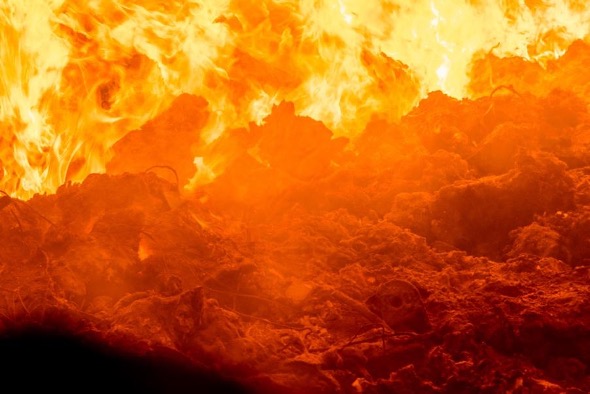
The week wasn’t just sitting in lecture halls: we also saw carbon capture projects in person. Halfway through the week, we took a trip to see the Amager Bakke waste incinerator plant. We donned hard hats, neon vests, and safety glasses before heading inside. The plant burns waste from all over Denmark—as well as Germany and Italy—and converts it to electricity and heating for the district, operating as both a waste facility and power station. Amager Bakke recently completed a successful carbon capture pilot program, with the goal to become a carbon-neutral waste management facility. Leadership at the plant is currently assessing ways to make it financially feasible to implement carbon capture long term. The co-benefits don’t stop at the energy production and carbon capture. The facility is the highest point in the city and has an integrated public recreation site called “CopenHill” with an artificial ski slope, hiking, climbing wall, and tubing area; several locals were taking advantage of the co-benefits during our tour. Flue gas cleaning systems are used to limit toxic emissions; the air released is composed mostly of water vapor and carbon dioxide, often making it cleaner than the surrounding air. The plant doesn’t smell at all from the outside. CopenHill is a point of national pride because of these co-benefits, and is helping to increase public acceptance of infrastructure projects that address climate change (YIMBY-ism).
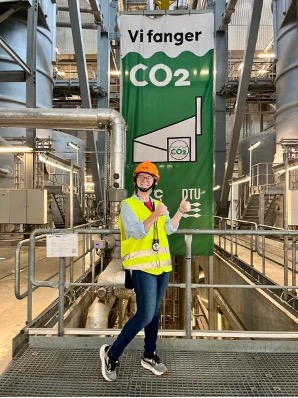
Left: Rebecca Lowy inside the Amager Bakke incineration plant.
Right: Incineration of waste, producing heat and electricity for the city of Copenhagen.
The second site was the Ørsted Avedøre Power Station CCS Facility. The power station incinerates straw to create energy in a biomass unit. The owners are constructing a massive carbon capture facility to capture ~150,000 tons of carbon dioxide annually. The power station anticipates beginning its carbon capture operation this year. We toured the facility, where we could see the Baltic Sea to the south. There were massive carbon capture tanks, and stations for compressed carbon dioxide to be transferred to trucks. For now, carbon dioxide will be transported via truck to Denmark’s west coast, transferred to ships, and delivered to Norway, where it will be injected offshore for permanent storage underground. Eventually, Ørsted plans to transport carbon dioxide by pipeline to the west coast. Exports of carbon dioxide from Denmark to Norway were enabled by the London Protocol amendment discussed above. Last year, Switzerland and Norway entered into the first CCS and CDR Internationally Transferred Mitigation Outcome agreement under Article 6.2 of the Paris Agreement, whereby Switzerland will also export carbon dioxide captured via both CDR and CCS to Norway for storage.
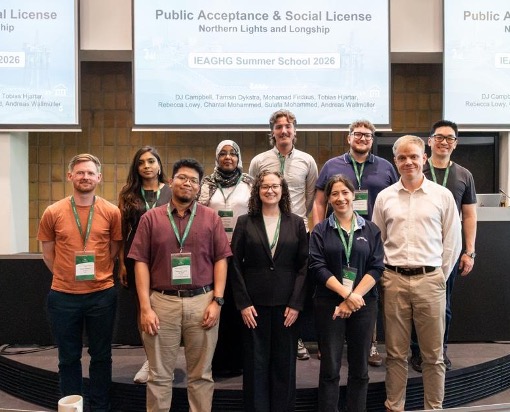
In the evenings, we split into teams to develop our own projects addressing CCS on that very same Norway CCS operation. The Northern Lights JV and Longship project are the first global hub for CCS: with capture stations around Northern Europe, shipping routes through the Baltic and North Seas, and development of a receiving terminal, pipeline, and offshore sub-surface geological sequestration. My group was assigned the topic of “Social License and Public Acceptance.” We spent every night hunkered over our laptops, researching the communities near operational carbon capture sites (Yara, in the Netherlands; Brevik, in Norway; and of course, Ørsted in Denmark); those affected by the shipping routes; and the people living near Øygarden, Norway, where the carbon dioxide is delivered and ultimately stored. New DAC facilities are being built in Øygarden, to complement the existing CCS infrastructure, suggesting that CCS can indeed support CDR implementation. Our team was guided by James Fann (President and CEO of the International CCS Knowledge Centre), and Dr. Gareth Johnson (geologist and Head of CCS Sustainability at Drax, a BECCS company in the UK). We presented our findings, including tracing the unusually wide acceptance of CCS projects in Norway, the importance of communicating transparent MRV results to locals, and the benefits of creating co-local benefits such as visitor centers, recreation sites, and citizen science to increase trust and participation in climate change mitigation techniques.
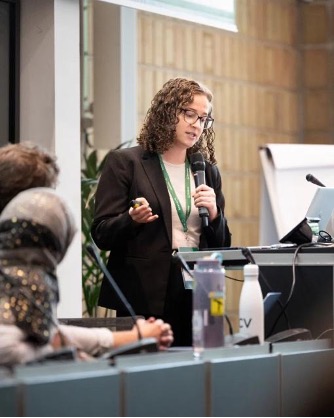
Left: Rebecca presents on social license and public acceptance of CCS projects to conference attendees, and why it is necessary for successful implementation.
Right: The Social License and Public Acceptance group, with mentors.
Perhaps the most valuable part of this trip was the people. Our cohort and teachers from around the globe had wide-ranging, thoughtful discussions about climate science, policy, and law; the benefits and drawbacks to a variety of solutions; and leadership methods to motivate action on climate change. These conversations showed the importance of us all being at the table together: that progress cannot be made without collaboration, and that despite obstacles, disagreements over best approaches, or political setbacks, the best resource we have to address climate change from every possible angle is each other. Understanding the value chain of CCS from start to finish is also critical for communicating the advantages and challenges, and identifying areas where law and policy can improve implementation, acceptance, and safety.
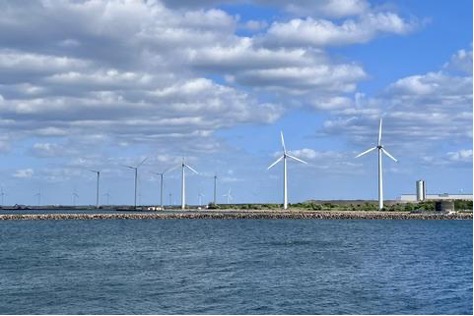
By the time I departed, it seemed to me that there was very little rotten in the state of Denmark. The heatwave had long since broken, and temperatures were pleasant again with the occasional drizzle. Danes of all ages cycled through the city on bikes while barely a car passed by. Windmills abounded, and CopenHill was visible on the horizon, its bright white plume of clean steam rising above the city. Our teachers and cohort that week were ambitious, intelligent, and energized; we all believe in the power of science, policy, law, and collaboration to address climate change. Though CCS is not a silver bullet, it’s certainly a silver lining. With CCS in our collective pocket as one of many tools, we have reason to be hopeful for a stable climate for generations to come.
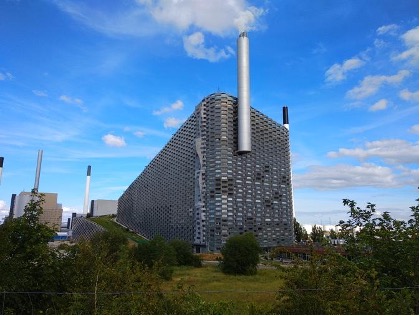
Left: The Amager Bakke plant from the outside, with CopenHill visible on the left side.
Right: Images of windmills taken during a boat tour of the Copenhagen canals.

Rebecca Lowy is the Climate Fellow at the Sabin Center for Climate Change Law at Columbia Law School.