Introduction
As a British judge with a special interest in environmental law, I have over the last two decades taken a particular interest in the developing role of the courts across the world in response to the challenges of climate change. In this article I shall look back at my perceptions of the responses of government agencies and courts over that period in the USA. We have gone from the ground-breaking decision of the Supreme Court in EPA v Massachusetts (2007)[1], which formed the basis of a strong EPA endangerment finding in 2009, and the central role of the USA in securing the critical Paris Agreement in 2015; to the election in 2024, for the second time, of a President who professes to regard climate change as a “hoax”, leading to the recent decision of the EPA to rescind the 2009 endangerment finding (having survived legal challenge for 17 years) on the ground that it never had power to make it in the first place. As an interested legal observer, my reactions have moved from admiration, through frustration, to incomprehension, and near-despair.
To American lawyers, the active involvement of a serving judge in this debate may seem surprising. I should explain that in the UK the reality of climate change and its causes were not a contentious political issue during my time as a judge. Our Climate Change Act 2008, which laid out a detailed legal framework for a programmes for cutting greenhouse gases up to 2050, was passed with all party support. It also established an independent expert Climate Change Committee to advise government on the programmes and to report to Parliament on their progress. Against this background of political consensus, there was no problem in me, as a serving Supreme Court justice, taking an active interest in the subject more widely.
The sharp contrast with some attitudes on the other side of the Atlantic was brought home to me in September, 2015, when, ahead of the COP 21 summit in Paris, I co-hosted on behalf of the UK Supreme Court, an international judicial conference in London on Climate Change and the Law.[2] The idea was to assemble a group of specialist judges from a number of different countries round the world, together with practitioners and academics, to look at the legal issues arising from climate change, and the role of the courts, national and international. We were supported by a strong introductory message from Charles, HRH Prince of Wales (as he then was), in which he spoke of “the appalling threat human-induced climate change poses to man’s future” and the “crucial role” of the courts in meeting the challenge.
In the months before our conference, there had been important judicial developments from very different legal systems – the Urgenda case in the Hague District Court in the Netherlands[3] and the Leghari case from the Lahore High Court in Pakistan[4]. Judges involved in both cases spoke at our conference of their experiences. In both cases, the national courts upheld challenges to their governments’ failures to implement effective policies to counter climate change. The conference also included a public lecture at the Supreme Court by Professor Philippe Sands QC, viewable on line through our website. He looked at the possible role of international law, and the possibility of a small island state, affected by climate change, securing a UN resolution to refer the issue of state responsibility to the International Court of Justice.
Shortly afterwards I learnt from our press office that the lecture had been picked up in an article by an American news organisation called Breitbart News (headed by one Steve Bannon). The burden of the article was that I and my fellow judges were scheming to “close the argument for ever, using the sledgehammer instrument of the International Court of Justice”, thus leading to “an effective global ban on so-called ‘climate change’”. The Breitbart article concluded with the comment “Sands is a dangerous man; even more so the man who instigated the conference, a hitherto obscure activist judge called Lord Carnwath”. That was of course nonsense. There was no question of closing down the debate on climate change, with or without the ICJ.[5] Fortunately my judicial colleagues did not take that too seriously. But I little thought that within a few years the views of Breitbart News, and of its director, would represent the prevailing orthodoxy in some US government circles.
Consistency in the courts
It is notable that during this period, regardless of the changing positions of successive Presidents, the recognition by the US courts of the reality of climate change and its causes, and of the responsibility of government to address it, has been unequivocal. That was made clear in 2007 by the judgment in the Massachusetts case itself. On a narrow view it was a decision on the meaning of the word “pollutant” in the EPA statute, specifically in relation to traffic emissions, on the EPA’s duties in respect of so-called “endangerment findings” under the statute, and on the standing of the State of Massachusetts to bring the action.
But its significance went much further. The language of the majority judgment (given by Justice Stevens) was uncompromising. He recorded without dissent the claimants’ assertion that global warming was “the most pressing environmental challenge of our time”. He charted the development over 40 years of a strong international consensus that global warming threatens “a precipitate rise in sea levels by the end of the century” and “severe and irreversible changes to the natural ecosystem”. He swept aside EPA’s arguments that emissions from American traffic made a relatively insignificant contribution to the global problem:
“…. Its argument rests on the erroneous assumption that a small incremental step, because it is incremental, can never be attacked in a federal judicial forum. Yet accepting that premise would doom most challenges to regulatory action. Agencies, like legislatures, do not generally resolve massive problems in one fell regulatory swoop… They instead whittle away at them over time, refining their preferred approach as circumstances change and as they develop a more nuanced understanding of how best to proceed…”
In November 2016 also came the strong decision of Judge Aiken in the US District Court of Oregon in Juliana v USA,[6] refusing to strike out the claim by a group of young citizens against the government for failing to protect them against the consequences of climate change. Citing authorities from round the world she held that the right to a climate system capable of sustaining human life is fundamental to a free and ordered society, and thus protected by the Due Process clause of the Constitution, and by the Public Trust doctrine.
The Juliana case progressed slowly through the higher courts. After Judge Aiken’s ruling and the exchange of pleadings, the case had become embroiled in procedural wranglings which found their way to the Supreme Court, and eventually came back to the Court of Appeals for the 9th Circuit, leading to a decision in early 2020[7]. That was during the first Presidency of Donald Trump. Although the claim was dismissed by the majority, there was no disagreement as to the factual basis of the claim. It seems that, whatever the personal views of the then President, his lawyers had not felt able to challenge that factual assessment.
The majority judgment of Judge Hurwitz was in strong terms:
“A substantial evidentiary record documents that the federal government has long promoted fossil fuel use despite knowing that it can cause catastrophic climate change, and that failure to change existing policy may hasten an environmental apocalypse…”
The minority judgment of Judge Staton records this factual consensus in even more striking terms:
“In these proceedings, the government accepts as fact that the United States has reached a tipping point crying out for a concerted response—yet presses ahead toward calamity. It is as if an asteroid were barreling toward Earth and the government decided to shut down our only defences. Seeking to quash this suit, the government bluntly insists that it has the absolute and unreviewable power to destroy the Nation.”
The reasons for refusing relief were about practicality and the limits of the court’s constitutional role. Any effective plan would require “a host of complex policy decisions entrusted, for better or worse, to the wisdom and discretion of the executive and legislative branches”; the fact that the other branches “may have abdicated their responsibility to remediate the problem” did not confer on the courts “the ability to step into their shoes.”
Personally I felt some surprise and disappointment that the majority felt unable to offer any remedy, even in declaratory form. I would not necessarily have expected them to go as far as more progressive courts, such as in the Netherlands and Pakistan. However, I would have hoped that, even in the more conservative traditions of the English courts, we would felt bound to offer some form of relief in the face of such a blatant abrogation of the state’s responsibility to protect the public.
Another striking example of the potential role of the courts in the USA came in the decision in December 2024 of the Montana Supreme Court.[8] Montana is of particular interest in the USA context for two contrasting reasons. First, it was (in 2023) the fifth largest coal-producing U.S. state and the twelfth largest oil-producing state. Fossil fuels were central part of its economy, and this had strongly influenced the development of state laws. On the other hand it is one of only three US states with express constitutional protection for environmental rights. A 1972 constitutional convention added language guaranteeing citizens “the right to a clean and healthful environment”. The case shows again how important such constitutional rights can be.
The focus of this case was a provision in the Montana Environmental Policy Act that prohibited the state from considering greenhouse gas emissions as a factor when deciding whether to issue permits for energy-related projects. This was challenged by an organisation called Our Children’s Trust on behalf of sixteen young residents of Montana. The challenge was upheld. The court held that the public’s right to a clean and healthful environment under Montana’s constitution was violated when the state legislature passed a law removing the impacts of greenhouse gas emissions from environmental reviews under the Act.
It is notable that, even in a state as supportive of fossil fuel extraction as Montana, there had been no attempt by the State to call evidence[9] to challenge the “overwhelming scientific evidence and consensus” (as the court described it) as to the scale of the challenge. The court (like the Supreme Court in the Massachusetts case) also rejected arguments that Montana’s permitted GHG emissions were relatively insignificant when evaluated against the total amount of global GHG emissions.
Government responses
By contrast with that consistency the government responses have changed dramatically with each administration. The Massachusetts judgment in 2007 came under the last Bush administration. There seems to have been little immediate policy response. However, following a change of government in 2008, the majority judgment paved the way for a radical change in the approach of the EPA, leading in December 2009 to a formal “endangerment finding” under the Act. The strong domestic policies made possible by the Massachusetts decision also strengthened the hand of the new President internationally. They led in November 2014 to the U.S.-China Joint Announcement on Climate Change, by which the two Presidents committed their countries to working together towards an agreed outcome “with legal force” applicable to all Parties at the United Nations Climate Conference in Paris in 2015. That was in due course achieved. It seems fair to conclude that, without the Massachusetts decision, the international consensus which led in due course to the Paris agreement would never have happened.
The momentum was carried into 2016. Almost as remarkable as the agreement itself was the speed with which it was brought into force. That required ratification by at least 55 parties representing at least 55% of global greenhouse gas emissions. The threshold was reached at the beginning of October, and the agreement came into effect a month later on 4 November – four days before the USA Presidential elections.
The global consensus suffered a rude setback in November with the election as US President of Donald Trump, followed in summer 2017 by his announcement of intended withdrawal from the Paris agreement. Although under the agreement that withdrawal could not take effect until November 2020, in the meantime he embarked on a series of executive orders evidently designed to unwind most of his predecessor’s climate policies.
To me as a legal observer, against the background of the apparently definitive Massachusetts judgment, and the overwhelming international consensus reached in Paris, it was shocking that there seems to have been no serious attempt to justify this dramatic reversal of policy by reference to legal principle, or scientific evidence of any kind. I attempted at various times to discover from the EPA’s website what its formal position now was. As far as I could see, on 20 January 2017 they had deleted the Climate Change section and all references to climate change[10]. Instead there was a note under the heading “This page is being updated”. I could find no change to that until late 2018, when reference was made to a statement by the Acting Administrator Andrew Wheeler (dated 17.10.18), welcoming a recent report showing a 2.7% reduction in greenhouse emissions between 2016-2017, said to be due “not to the heavy hand of government” but to “technological breakthroughs in the private sector”. The statement added:
“The Trump Administration has proven that federal regulations are not necessary to drive CO2 reductions. While many around the world are talking about reducing greenhouse gases, the U.S. continues to deliver, and today’s report is further evidence of our action-oriented approach.”
That suggests that the EPA at least was acknowledging the reality of problem. Not so apparently the President. In November 2018 the government itself published its Fourth National Climate Assessment, which left no apparent doubt as to the devastating social and economic effects of climate change on the USA and elsewhere, and the need for urgent global action to address them.[11] The President’s reported response was that he had read parts of the report but “didn’t believe it”.[12]
In 2021 a degree of rationality was happily restored to US climate change policy under the Biden administration, when the USA rejoined the Paris agreement and played a leading role in the COP process, including the COP29 conference in November 2024 in Baku.
Then in November 2024 we had another US election. At that time, I happened to be part of a group of international environmental judges and academics, invited to speak at a training conference for Chinese Environmental Judges in Beijing, hosted by the Supreme People’s Court, in conjunction with ClientEarth. Among other matters, we were discussing the courts’ recent guidance to the lower courts on climate change, and the “strategic goal” of “achieving carbon peaking and carbon neutrality”.
It was during one of those sessions that we heard the result of the US elections. One could sense a buzz round the hall, as attention switched from the stage to mobile phones. It was a somewhat surreal experience. The contrast was so striking – speaking about climate adjudication to a group of 300 senior Chinese environmental judges, while the world’s other major emitter of greenhouse gases was busy re-electing an outspoken climate denier. In the question session we were asked what it meant for climate change policies and the Paris agreement.
At that time I was reasonably hopeful that the new President might pull back from his promise to take USA out of the Paris Agreement once again. Even the Chief Executive of ExxonMobil, Darren Woods, had been reported at the Baku COP 29 conference in November 2024 as advising against withdrawal, partly because of the uncertainty and inefficiency caused by having “the pendulum swing back and forth as administrations change.”[13] He thought it important for America to be playing an active role in the COP process, if only to protect its own interests. ExxonMobil’s 2024 report “Advancing Climate Solutions” was even clearer. It said:
“Getting the planet on a path to net zero requires unprecedented innovation and collaboration at immense scale…
If you were to make a list of the biggest challenges facing humankind right now. Addressing poverty and climate change would be at the top…”
Sadly such views seem to have made no impression on the new President. Hopes that rationality, or even business common sense, might prevail were rudely dashed. One of the new President’s first acts was to start the process of removing US from the Paris Agreement. This was under an Executive Order bizarrely entitled “Putting America First in International Environmental Agreements”.
On 4th February 2025 the Environmental Protection Agency’s website greeted us with extracts from a Breitbart News interview with the new Administrator, Lee Zeldin. He proudly announced that, under the new President:
“the EPA is going to aggressively pursue an agenda powering the Great American Comeback… to return to its core mission of conservation… and ditch the leftist environmentalist radicalism that has dominated in the past… “
Zeldin echoed the President’s talk of “a climate change hoax”, and his concern that “in the name of climate change, politicians in Washington, DC, were willing to bankrupt our economy…”
Soon after,[14] Zeldin announced what he called a “dagger straight into the heart of the climate change religion”, with a list of 31 regulations to be “scaled back or eliminated”. One of the most consequential actions, it was said, would –
“…see the EPA reconsider a landmark 2009 finding that greenhouse gases harm human health, which has been used to underpin laws aimed at addressing the climate crisis”.
Of course it would have been wonderful if the EPA team, in their review, had been able to discover that greenhouse gases present no danger, and that our worries are groundless. Sadly, but not surprisingly, that did not happen. Whatever Mr Zeldin may have said or hoped, the scientific basis of that endangerment finding remained beyond serious challenge.
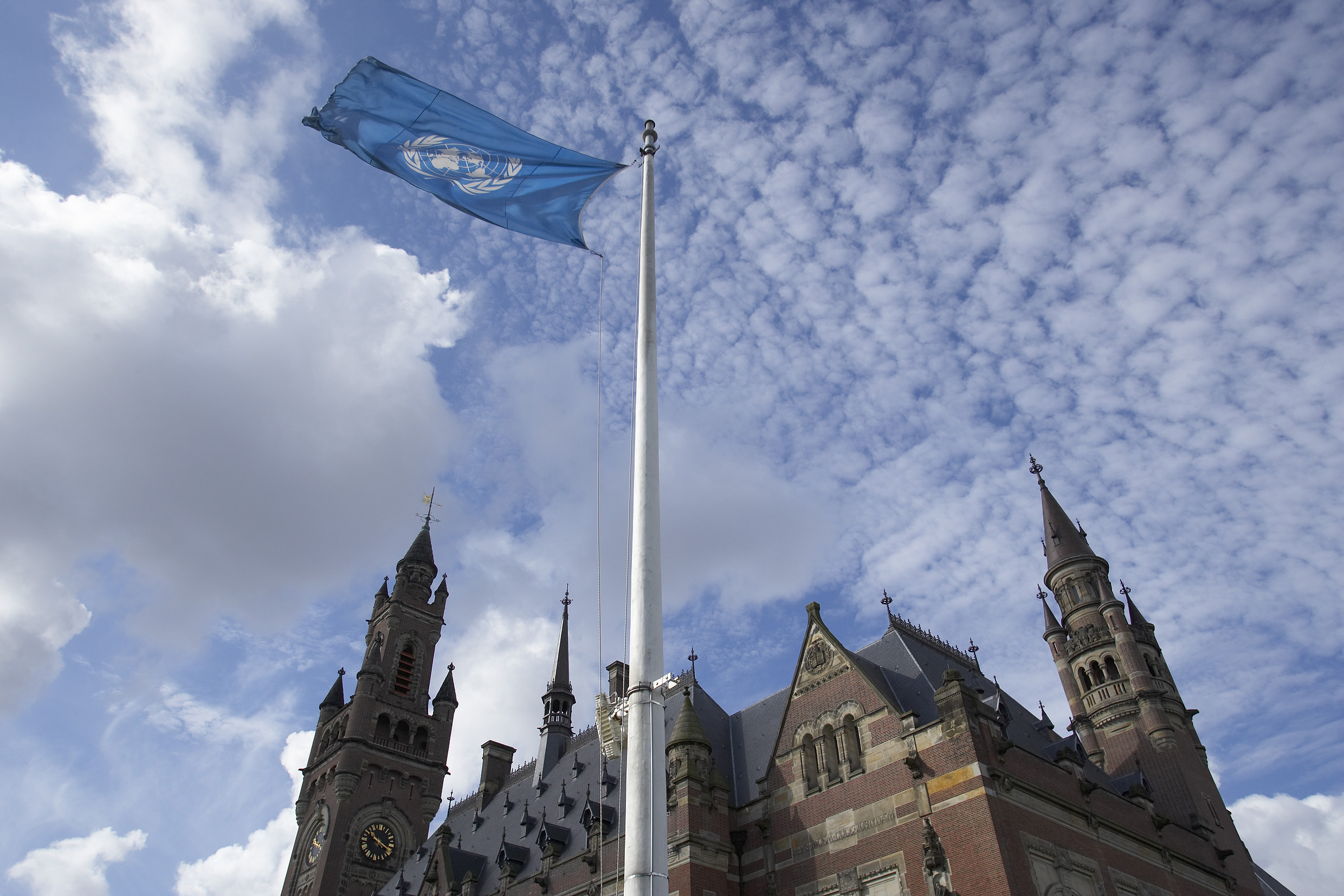
That was made all too apparent when, on 23rd July 2025 we had the Advisory Opinion of the International Court of Justice (in proceedings to which the USA was party). There seemed to be no sign that this decision made any impression on the US administration. With exquisite timing, six days later on 29th July 2025, the EPA published a proposed rule to rescind the 2009 Greenhouse Gas Endangerment Finding, and eliminate all greenhouse gas emission standards for US motor vehicles and engines. Following consultation, a formal rule to this effect was issued in February 2026.
In the earlier proposal, the EPA had asserted that there was “insufficient reliable information” about the harmful effects of climate change. Wisely, this line of argument was abandoned in the final version. In a document extending to more than 100 pages, the reversal of policy is justified solely on supposedly legal grounds. The EPA, it is said, has concluded that “we lack statutory authority to maintain this novel and transformative regulatory program”, and that its actions had “rested on a profound misreading of the Supreme Court’s decision in Massachusetts v. EPA, 549 U.S. 497 (2007)”. For good measure the paper advances a “de minimis” argument. It is said that the action was outside its powers because regulating GHG would have had “no material impact on global climate change concerns”.
As I understand it the repeal of the Endangerment Finding is already subject to challenge in the courts. I will leave it to others, more knowledgeable of the relevant law, to assess the EPA’s stated reasons. I will make two comments. First, it seems extraordinary to find a “de minimis” argument now being advanced, apparently as a point of law, given the force with which similar arguments were rejected by the majority judgment of the Supreme Court in 2007 (and more recently by the Montana court). More generally, it seems little short of grotesque that a responsible public authority, committed (as its website says) to “addressing climate change”, should of its own motion seek to establish that its actions to that end, which have survived legal challenges for the last 17 years, were beyond its own powers.
Meanwhile, the EPA’s website shows some sign of having caught up with reality. According to the current section on climate change[15]:
“Understanding and addressing climate change is critical to EPA’s mission of protecting human health and the environment…
EPA is committed to providing clear, accessible information about the variety of ways that the changing climate is affecting the health, prosperity, and security of all Americans. This web area features information about climate science, impacts, and solutions. It also highlights actions EPA is taking to help build a stronger, safer, and brighter future for all.”
There is even some recognition of the contribution of fossil fuels.[16] Unfortunately this commitment to “understanding and addressing climate change” does not appear to extend to any indication of what in practical terms the EPA intends to do about it, or any reference to the steps being taken by the international community to address it.
Conclusion
As a legal observer I cannot do better than end this commentary with two quotations from the powerful Advisory Opinion of the International Court of Justice:
“72… it is scientifically established that the climate system has undergone widespread and rapid changes, including, in particular, an increase in global surface temperatures, or global warming. Climate change is caused by the accumulation of certain gases in the atmosphere that trap the sun’s radiation around the Earth, leading to a greenhouse warming effect. While certain GHGs occur naturally, it is scientifically established that the increase in concentration of GHGs in the atmosphere is primarily due to human activities, whether as a result of GHG emissions, including by the burning of fossil fuels, or as a result of the weakening or destruction of carbon reservoirs and sinks, such as forests and the ocean, which store or remove GHGs from the atmosphere.
456… the questions posed by the General Assembly represent more than a legal problem: they concern an existential problem of planetary proportions that imperils all forms of life and the very health of our planet… A complete solution to this daunting, and self-inflicted, problem requires the contribution of all fields of human knowledge, whether law, science, economics or any other. Above all, a lasting and satisfactory solution requires human will and wisdom — at the individual, social and political levels — to change our habits, comforts and current way of life in order to secure a future for ourselves and those who are yet to come.”
The EPA, it seems, is committed to providing “clear, accessible information” on climate change. I look forward to finding on its website a clear statement of its position on the ICJ judgment, and what it is proposing to do about it.
[1] 549 U.S. 497 (2007)
[2] It was organised by the Supreme Court jointly with the government Foreign Office and Kings College, London, with support from UNEP and the Asian Development Bank See: https://www.kcl.ac.uk/archive/news/law/climate-courts/index
[3] Urgenda Foundation v. The Netherlands [2015] HAZA C/09/00456689
[4] Leghari v Federation of Pakistan (2015) W.P. No. 25501/201
[5] Now that we have an actual judgment of the ICJ (see below), we can see, sadly, how far it seems to be from closing down the debate.
[6] Juliana v United States Case No. 6:15–cv–01517–TC
[7] Juliana v. United States, 986 F.3d 1295 (9th Cir. 2021)
[8] Held v State of Montana 2024 MT 312
[9] I note that, according to Wikipedia’s entry on the case, “ a written report by climate change contrarian Judith Curry—the state’s sole climate science witness—was not entered into the record, nor did Curry testify as originally planned”. It does not say why.
[10] www.epa.gov/climatechange
[11] Some useful work did continue with US participation, resulting for example at COP24 in Katowice in 2018 in the adoption of the “Paris Agreement Rulebook”.
[12] Holden, Emily (November 26, 2018). “Trump on own administration’s climate report: ‘I don’t believe it'”. The Guardian. Washington, DC. Retrieved November 26, 2018
[13] https://www.nytimes.com/2024/11/12/business/energy-environment/exxon-mobil-baku-climate-cop29.html
[14] https://www.theguardian.com/us-news/2025/mar/19/trump-epa-pollution-regulation-cuts
[15] https://www.epa.gov/climate-change
[16] See eg https://www.epa.gov/climatechange-science/basics-climate-change

Robert Carnwath
Robert Carnwath (Rt Hon Lord Carnwath of Notting Hill CVO) was a member of the Supreme Court of the United Kingdom from 2012 to 2020. He is currently an Associate Member of Landmark Chambers, London, and (inter alia) Visiting Professor in Practice of the Grantham Institute at the London School of Economics. Lord Carnwath’s legal career spanned 50 years, as practising barrister and judge, until his retirement from the Supreme Court in March 2020. During that period he acted (inter alia) as Attorney-General to HRH Prince Charles, Prince of Wales (for which service he was made a Commander of the Victorian Order), as Chairman of the Law Commission, and as Senior President of Tribunals. Internationally he has been a judicial adviser to the UN Environment Programme, and a founder member of the EU Forum for the Environment (EUFJE), and the Global Judges’ Institute on the Environment (GJIE). He has spoken at judicial conferences in many countries, as a guest of international organisations including the UN Environment Programme, the Asian Development Bank, the Commonwealth Lawyer’ Association, and more recently the Supreme People’s Court of China.