The explosive growth of artificial intelligence (AI), cloud computing, and digital services has brought renewed attention to the physical infrastructure underpinning the digital economy: data centers. While critical to the operations of major tech companies, data centers are now among the most energy-intensive forms of industrial infrastructure. Although it is possible to run data centers using renewable energy, their rapid expansion, fueled by the demand for AI, has raised questions about how to balance the economic benefits of new technologies , as well as the exacerbation of water security issues already worsened by climate change. These concerns have not escaped the attention of climate interest groups, all demonstrating an emerging wave of litigation challenging data center development on climate grounds.
Early Data Center Litigation in Chile – A Sign of Litigation to Come
One of the earliest cases to challenge a data center on climate grounds was filed in Chile in 2020 – Municipality of Cerrillos (Google Data Center) v. Evaluation Commission of the Metropolitan Region. In this case, local residents and the Municipality of Cerrillos applied for judicial review of the approval of a new Google data center in . A key climate-related issue raised by the applicants was the data center’s potential water use, which proponents had estimated would require the extraction of 169 liters of water per second to cool the data center’s servers. Santiago’s aquifer has faced extreme stress from for over a decade, with the national and local governments declaring agricultural emergencies at various points in time to address severe water shortages. In this context, the applicants argued, among other things, that the project would have significant impacts on the aquifer, which had not been properly evaluated in the project’s environmental impact assessment (EIA).
In its ruling, the Second Environmental Court the claim in part and ordered the proponents to provide an additional EIA study that included the impacts of climate change in their evaluation of the project’s effects on the aquifer. In response to the ruling, The current status of the project is unclear.
Ireland – A Potential “Hub” for Data Center Litigation
Ireland has the potential to become a prime test case jurisdiction for data center litigation. Geographically, it is one of the least densely populated countries in Europe and hosts the European headquarters of many of the world’s largest technology companies. For these reasons, Ireland has become an attractive hub for digital infrastructure, with data centers now accounting for approximately 24 percent of Ireland’s electricity demand – a figure projected to rise further in the coming years. At the same time, Ireland remains off track to meet its legally binding 2030 greenhouse gas emissions reduction targets, and concerns have been raised by leading scientists that the continued growth in data center construction will deepen reliance on fossil fuels and exacerbate Ireland’s carbon budget overshoot. Against this backdrop, civil society organizations have increasingly turned to litigation to challenge data center approvals, arguing that continued expansion is incompatible with domestic climate law, EU environmental obligations, and international climate norms.
In Colin Doyle v An Bord Pleanála, a group of individuals, and two environmental NGOs – FutureProof Clare, and Friends of the Irish Environment (FIE) – sought to challenge the approval of a data center by the Irish national planning authority. The case was primarily grounded in biodiversity considerations, with the applicants arguing that the authority had failed to consider the impact of the development on a rare bat species. However, the also contended that the Board had breached its statutory obligations under section 15 of the Climate Action and Low Carbon Development Act 2015 (as amended), which requires public authorities, insofar as practicable, to exercise their functions consistently with national climate goals and objectives. The applicants argued that in approving the data center, the national planning authority had impermissibly relied on “the engines on-site will be specified to work on Natural Gas or Hydrogen or any mix in between in order to future proof the plant”) and had acted irrationally in failing to require any mitigation of the greenhouse gas emissions from the data center. Although the Court did not rule on the climate arguments (given that the central basis of the challenge concerned biodiversity), it determined that the project could proceed on the basis that the authority had committed a “harmless error” in failing to explicitly take note of the bat species.
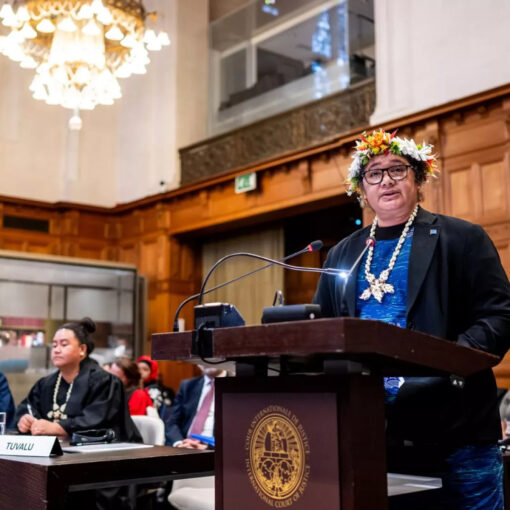
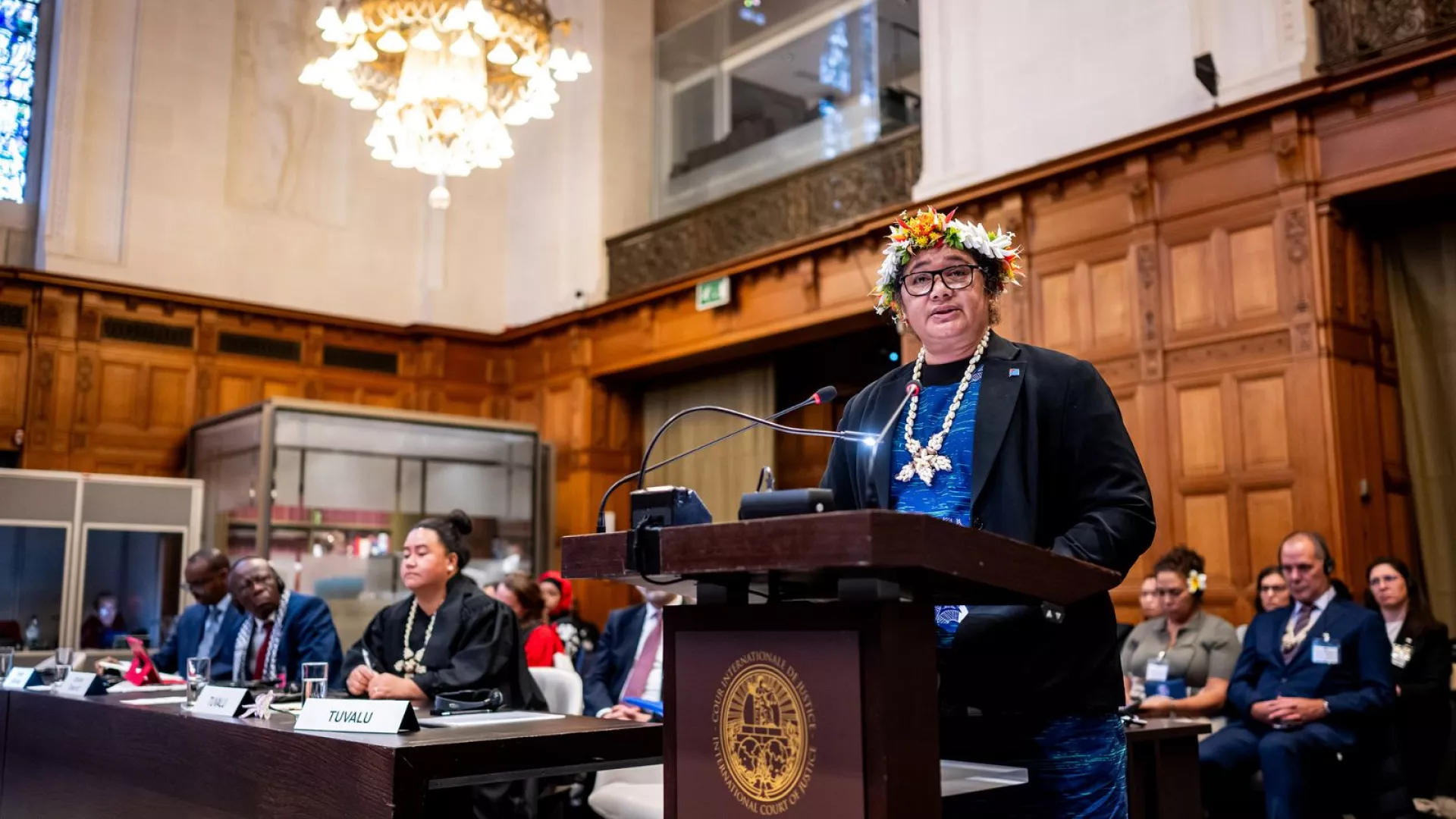
A more direct confrontation between data center development and climate considerations is evident in Friends of the Irish Environment v An Coimisiún Pleanála, which concerns the proposed Herbata Data Center. FIE have challenged the potential approval of the multi-billion-euro data center, arguing that it jeopardizes Ireland’s climate targets and violates domestic, EU, and international law. The challenge relies heavily on Ireland’s domestic climate legislation but also cites the Advisory Opinion of the International Court of Justice (ICJ) on climate change. In the Opinion, the ICJ clarified that states may commit an internationally wrongful act where they fail to adequately regulate greenhouse gas emissions from private actors. FIE uses the Advisory Opinion to argue that “failure to mitigate emissions or allowing projects that contribute to climate harm may expose the state (and by extension, councils) to claims for reparations or litigation.” In other words, that the approval of the Herbata Data Center may form part of a The citation of the Advisory Opinion is slightly unusual in a dualist jurisdiction such as Ireland, illustrating both the transnational influence of the ICJ’s Advisory Opinion on plaintiffs’ framing and legal strategy and its potential to act as a normative “hook” through which domestic challenges may eventually lead to further international climate litigation. through which domestic challenges may eventually lead to further international climate litigation.
The ultimate outcome of these cases in Ireland will likely hinge on the recent Supreme Court ruling in Coolglass Windfarm Limited v. An Bord Pleanala. In this case, the Supreme Court confirmed that section 15 of the Climate Act could allow for a range of possible outcomes for a planning authority when making a permitting decision, but, where the section is relied on in support of an application, an authority should be able to explain why the decision to which it has come is consistent as far as practicable with climate objectives. In this context, it is possible that an authority may be expected to explain how it can reconcile granting permission for data centres with Ireland’s overarching climate action plans, and in turn face challenges should evidence demonstrate that an expansion of data centers is not in line with these plans or Ireland’s climate targets. Regardless of the eventual outcome of these cases, it is likely that Irish courts will have to continue to grapple with the climate impacts of data centers in the coming years.
Another water-stressed region, California, has also been a site of contestation for data centers on many fronts. The state is home to the world’s largest technology companies—including Alphabet, Apple, and Meta—and leading AI developers, such as Anthropic and OpenAI, and also has one of the highest concentrations of data centers in the U.S. AI’s intensive energy demands have led to concerns around the increased risk of blackouts in California and rising energy bills, while also making it more challenging for the state to decarbonize. Yet regulatory efforts have thus far proven largely unsuccessful at addressing these impacts meaningfully.
A recent case, Center for Biological Diversity v. City of Pittsburg, was brought over the licensing process for a new data center and challenged the City of Pittsburg’s review of the center’s climate and other environmental impacts under the California Environmental Quality Act (CEQA) and its implementing Guidelines (the CEQA Guidelines). The plaintiffs allege, among other things, that the impact report failed to adequately consider the project’s “direct, indirect, and cumulative [greenhouse gas] impacts” and to propose corresponding mitigation measures, while also failing to correctly assess the data center’s foreseeable water demand, in light of the impacts climate change will have on available water supply.
The plaintiffs have requested the court to vacate the project’s permit and direct the City of Pittsburg and the project proponents to comply with CEQA and the CEQA Guidelines, in addition to issuing a declaration that the data center is “inconsistent with other applicable, plans, policies, or regulations.” This presumably includes plans and policies relating to climate change: under Tit. 14, § 15064.4 of the CEQA Guidelines, regulators are advised to give due consideration to climate mitigation policies that have been adopted by the state and lower levels of government when assessing a project’s climate impacts.
In December 2025, a settlement agreement was reached between the Center for Biological Diversity and the defendants, resulting in a series of climate-positive measures, including commitments to only use renewable energy to power the data center and to use recycled water to cool the servers. This case exemplifies how may become potential battlegrounds in legal efforts to slow down data center boom until climate-related factors are duly considered and accounted for in planning decisions.
Data Centers as a New Area of Climate Litigation
Just as climate litigation has extended beyond the fossil fuel sector—targeting activities ranging from airport expansions to lithium mining—data centers are no exception to this trend. Given their energy-intensive nature and outsized impact on water consumption, it is not altogether surprising that data centers are being brought before the courts over their potential climate impacts across a variety of jurisdictions using a diverse array of legal strategies. We have yet to see how courts will engage with climate arguments and, in particular, whether climate considerations may form the primary basis through which a data center is denied planning permission or expansion. However, until these impacts are properly addressed by both regulators and project proponents, it is likely that these cases will continue to rise and courts will be identifying how to balance demand for data centers with the underlying need to avoid contributing to further climate harm.

Eoin Jackson
Eoin Jackson is a Legal Fellow at the Institute for Governance & Sustainable Development focusing on climate litigation and climate governance. He is a Peer Review Network rapporteur for Ireland.

Emily Bradeen
Emily Bradeen is a Policy Analyst on the climate law and governance team at the Grantham Research Institute on Climate Change and the Environment at London School of Economics.